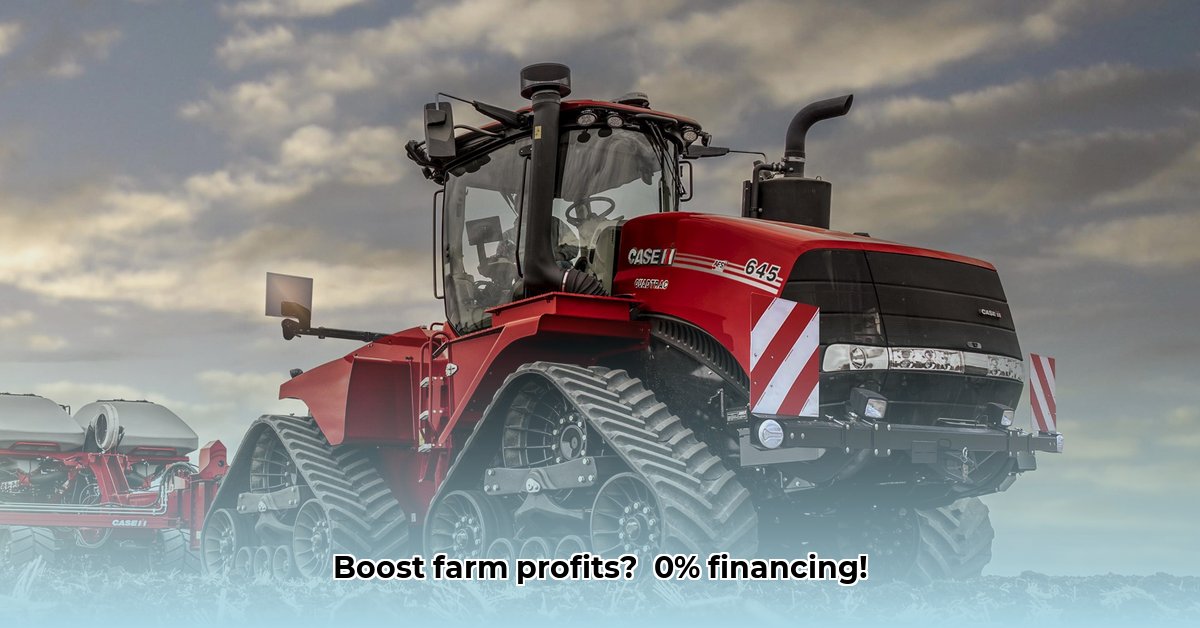
Case IH 2WD Tractors: Balancing Profit and Sustainability
Farming is a delicate balance between maximizing profits and ensuring the long-term health of your land. The allure of new equipment, especially with attractive financing options like Case IH's 0% financing, is strong. But are these short-term gains worth potential long-term compromises? This in-depth analysis explores the Case IH 2WD tractor, examining its fuel efficiency, the implications of 0% financing, and the crucial role of sustainability in your farming decisions. To understand the overall investment, check out this resource on tractor costs. We'll use data and real-world examples to help you make informed choices that benefit your bottom line and the future of your farm.
Fuel Efficiency: A Significant Cost Savings Opportunity
Fuel costs are a major expense for farmers. Case IH 2WD tractors are marketed with impressive fuel efficiency claims. However, how can farmers verify these assertions? Independent verification of fuel consumption data under various operating conditions is crucial. Examining data from independent testing sources and comparing fuel economy figures with competitor models provides solid evidence. Real-world feedback from farmers offers invaluable context. Could a reduction in fuel consumption of even a few gallons per hour translate into thousands of dollars saved annually? The potential savings are substantial.
0% Financing: A Short-Term Incentive with Long-Term Implications
Zero percent financing for 60 months is an enticing offer. This strategy, while effective for boosting immediate sales, requires careful analysis. While the absence of interest payments is appealing, farmers must consider the total cost of ownership and the potential long-term financial burden. The monthly payments might seem manageable now, but what if crop prices drop or unexpected repairs arise? Could this attractive offer ultimately hinder investments in sustainable practices or other crucial farm improvements? A detailed financial plan, considering all potential variables, is essential before committing to such a substantial loan.
Evaluating Long-Term Sustainability: Beyond Fuel Efficiency
Sustainability is more than just fuel efficiency. The entire lifecycle of a Case IH 2WD tractor must be considered: from manufacturing and transportation to eventual disposal. Currently, comprehensive data on the environmental impact throughout the product's lifecycle is limited. Independent lifecycle assessments (LCAs) are crucial for transparently evaluating the environmental footprint. This analysis should cover raw material extraction, manufacturing processes, energy consumption during operation, and responsible end-of-life management. The absence of easily accessible LCA data hinders a complete understanding of the tractor's long-term environmental implications. Demand for greater transparency from manufacturers like Case IH is vital for informed decision-making.
Challenges and Opportunities: Streamlining the Process
Farmers often face significant challenges related to equipment registration and access to support documentation. Streamlining these processes through easily accessible online resources and improved customer service would greatly enhance the overall user experience. Digital solutions can expedite paperwork and provide readily available information, offering potential efficiencies and minimizing administrative burden. A dedicated online portal with clear instructions and support resources would significantly reduce frustration for farmers.
Farmer Perspectives: Real-World Experiences Matter Most
The experiences of farmers who have used Case IH 2WD tractors offer invaluable insights. Anecdotal evidence from farmers using these tractors under diverse conditions provides a crucial perspective that supplements marketing materials. This includes practical feedback on operational efficiency, maintenance costs, and long-term reliability. These real-world accounts should be prioritized alongside manufacturer claims. Farmers' firsthand experiences provide a balanced and realistic assessment of the tractor's value proposition.
Conclusion: A Sustainable Future Requires Informed Choices
The decision to purchase a Case IH 2WD tractor requires a careful balancing act. While 0% financing offers immediate appeal, farmers must assess the long-term implications for their budget and sustainability goals. The lack of readily available data on lifecycle environmental impact calls for greater transparency from Case IH and a greater demand for this information from farmers. By demanding comprehensive data, prioritizing long-term sustainability, and considering real-world experiences, farmers can take control and choose the most appropriate equipment for their farm and the planet's future.